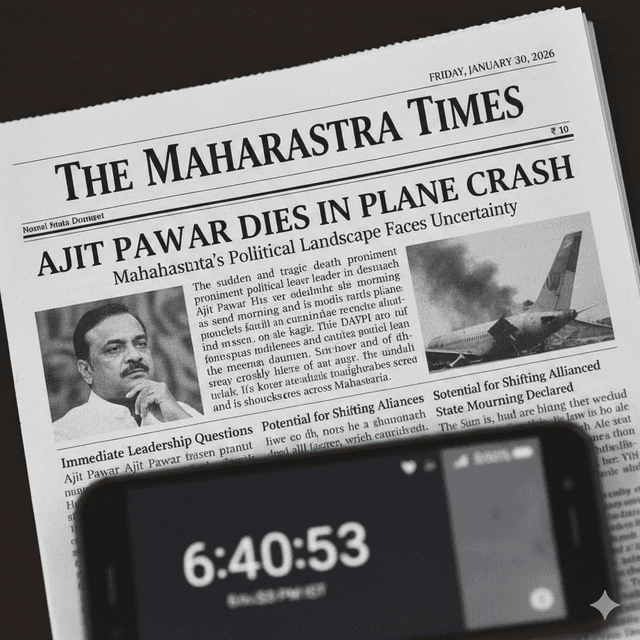
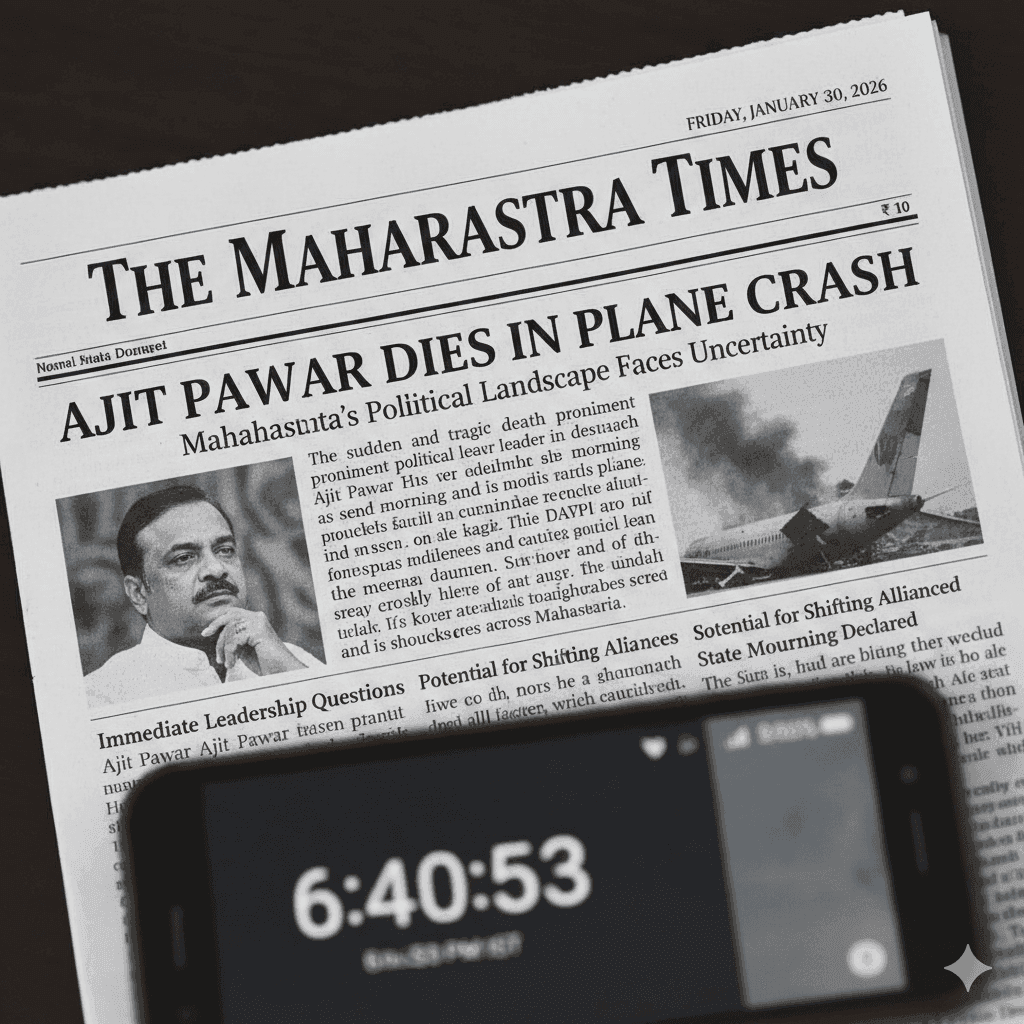
Ajit Pawar Dies in Plane Crash: Maharashtra’s Political Landscape Faces Uncertainty
sorabh
January 28, 2026
The sudden death of prominent leader Ajit Pawar in a plane crash sends ripples across Maharashtra politics, with parties and citizens grappling with immediate leadership questions and the potential for shifting alliances.
In a shocking development that has reverberated throughout Maharashtra and beyond, senior politician Ajit Pawar died in a plane crash late yesterday, leaving the state’s volatile political landscape in a swirl of uncertainty. The Ajit Pawar plane crash is not just making big headlines across India but is also prompting immediate soul-searching among parties, voters, and businesses, as leaders scramble to assess the fallout and plan their next moves. With Maharashtra's ongoing legislative maneuvering and high-stakes election season, Pawar’s unexpected passing couldn’t have come at a more critical juncture. The event has sparked intense media scrutiny, fueled by urgent statements from national figures, trending discussions on social media, and somber reactions from within the Nationalist Congress Party (NCP) and allied groups. Over the past 24 hours, tributes have poured in from rivals and supporters alike, underscoring Pawar’s influence and the deep sense of shock gripping Indian politics today.
Why It Matters
Ajit Pawar’s death in the plane crash is more than just a tragic accident; it has immediate and far-reaching social, business, and governance implications for Maharashtra and the wider Indian political scene. As Deputy Chief Minister and a central figure in multiple coalition negotiations, Pawar’s leadership played a pivotal role in both policy direction and alliance-building. The sudden leadership vacuum is already affecting market sentiment—seen in the cautious business outlook from investors early this morning—and is raising pressing questions about government stability, administrative continuity, and upcoming legislation. Moreover, digital marketers and communication professionals are closely watching how brands and organizations respond to this rapidly evolving narrative, especially since political stories have proven to shape consumer engagement and campaign strategies in the current climate. The Indian electorate faces new uncertainty about effective representation, especially with critical land, infrastructure, and business reforms still hanging in the balance.
Ajit Pawar Plane Crash: A Nation Reacts
News of Ajit Pawar’s death in a plane crash broke late last evening, with official statements confirmed by Maharashtra’s Home Department and first-response teams. Within hours, #AjitPawar trended across platforms—including X (formerly Twitter), LinkedIn, and WhatsApp—demonstrating how social media acts as both a rapid information hub and a space for public mourning. The accident, which occurred outside Mumbai, has prompted calls for increased safety oversight in the aviation sector, especially after two high-profile corporate flights faced technical issues earlier this year. Major national newspapers and digital outlets carried front-page headlines on Pawar’s legacy and the challenges awaiting his successors, reflecting the scale of public and institutional engagement in the aftermath.
Immediate Political Consequences and Party Dynamics
Pawar’s passing throws Maharashtra’s already fluid political alliances into a state of flux. In the last 24 hours, both the Shiv Sena and Congress Party held emergency meetings to re-evaluate their partnership and candidate selection processes. The NCP, split into factions since last July, now faces renewed pressure to clarify its leadership hierarchy and future strategy. Marketers have noted changes in political messaging and outreach, with party websites and social accounts posting joint tributes while quietly reworking campaign materials to reflect the new context. Industry experts point out that Maharashtra’s legislative calendar—including key budgetary votes—is now under review, with senior members debating who will step in to fill Pawar’s influential seat in the Cabinet.
Comparisons with Previous Political Losses and Lessons Learned
The Ajit Pawar plane crash evokes memories of similar incidents involving national leaders—such as the loss of Madhavrao Scindia in 2001—which had lasting effects on policy formulation and party cohesion. Historically, abrupt leadership changes have opened space for emerging voices but also triggered periods of instability. Over the past few years, Indian politics has seen increased emphasis on disaster recovery protocols and transparent succession planning; however, real-time case studies like this highlight ongoing vulnerabilities. The swift, coordinated media response—public statements, live interviews, and digital tribute campaigns—points to more sophisticated crisis communication playbooks than in previous decades, reflecting both industry best practices and the growing power of social media narratives.
Opportunities and Concerns in the Aftermath
While the prospect of new alliances and leadership brings potential for innovation in governance, there are genuine concerns about the timing and nature of transition. Maharashtra’s business sector, which has benefited from Pawar-driven reforms in agriculture, financial technology, and infrastructure, now faces uncertainty in approvals and incentive programs. Recent commentary from industry leaders such as the Confederation of Indian Industry (CII) stresses the need for continuous engagement between policymakers and private enterprise, especially during periods of crisis. For marketers and public relations teams, the Ajit Pawar plane crash underscores the importance of crisis management, transparent messaging, and maintaining stakeholder trust in turbulent times.
Updates from the Last 24 Hours: Tributes and Statements Shape the Narrative
In the hours following the tragedy, major Maharashtra-based conglomerates, advocacy groups, and regional media outlets hosted live tribute events and special broadcasts. The NCP leadership released an official video message early this morning, pledging to honor Pawar’s legacy through continued focus on farmer welfare and sustainable development. Meanwhile, public forums and digital news portals have been flooded with testimonials—ranging from high school students recounting Pawar’s educational initiatives to established entrepreneurs crediting his economic policies for sectoral growth. These real-time commemorations provide a unique glimpse into the wide-ranging impact Ajit Pawar had across government, business, and civil society, making his passing a truly cross-cutting event.
Practical Implications / What It Means for Readers
- Businesses with pending projects or investments in Maharashtra should review political risk and institutional continuity before making major decisions.
- Communication professionals and marketers are advised to update messaging, monitor public sentiment, and react quickly to evolving narratives.
Market or Industry Outlook
While the immediate impact on Maharashtra’s political and business environment is significant, experts urge patience and close monitoring. Industry leaders expect short-term volatility, especially in state-run projects and agricultural sectors, but also see opportunities for fresh leadership and policy innovation—if parties can stabilize alliances quickly. Political analysts recommend companies and organizations diversify their local partnerships and maintain robust contingency plans, as recent events highlight the unpredictability inherent in the political sphere.
Conclusion & Reader Takeaway
The sudden death of Ajit Pawar in a plane crash has triggered both heartbreak and hard questions in Maharashtra and across the country. As the state navigates an uncertain transition, every stakeholder—from politicians and business owners to marketing professionals—will need to stay informed, agile, and proactive. Maharashtra’s political landscape may shift, but careful engagement and transparent strategies remain vital for moving forward. In times of change, staying up-to-date with credible news sources and monitoring ongoing developments will help readers adapt and respond thoughtfully to whatever comes next.