CRISPR Breakthrough Enables Widespread Crop Enhancement, Ushering in a New Era of Agriculture
sorabh
January 28, 2026
Scientists have used large-scale CRISPR editing to develop high-yield, climate-resilient crops, raising hopes for food security. This marks a major advance in sustainable agriculture and global supply chain resilience.
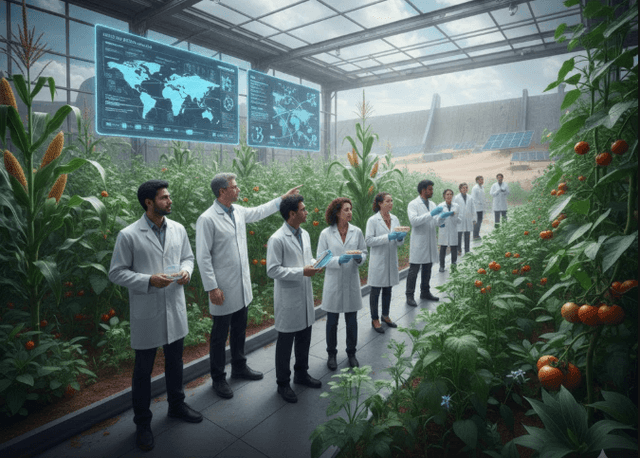
In a major leap for agricultural biotechnology, scientists have achieved a new milestone in CRISPR breakthroughs: gene editing at scale, developing crop varieties that promise higher yields and greater resistance to tough climate conditions. This surge of innovation arrives at a time when food security and supply chain resilience face unprecedented global pressures. Just yesterday, leading research groups in the U.S., China, and Brazil reported the successful application of large-scale CRISPR editing in staple crops—including wheat, rice, and corn—with the edited plants already demonstrating improved resilience against drought, disease, and pests during the final rounds of greenhouse trials. As a result, hopes are rising across food-producing regions, from Midwest farms to Asian rice paddies, for a more sustainable and secure future in agriculture.
Why It Matters
The importance of this development goes far beyond laboratory achievement. The world’s population is climbing steadily, while climate change threatens traditional farming models with more frequent droughts, heatwaves, and unpredictable harvests. Recent spikes in global food prices and supply chain challenges have put the spotlight on technological advances capable of addressing these vulnerabilities. The accelerated progress in CRISPR breakthroughs: gene editing at scale means scientists, farmers, and policymakers are all looking at tangible solutions—ones that could change the way food is produced, distributed, and consumed worldwide.
Large-Scale CRISPR Editing Ushers in New Crop Generation
Only a few years ago, gene editing at scale was a distant goal for agricultural science. While CRISPR technology made headlines for its precision and efficiency, early experiments focused mainly on single-trait improvements or laboratory-scale edits. Now, leveraging improved “multiplex” editing systems published this week, researchers have finely tuned multiple genes at once across entire crop populations.
According to new results released on Tuesday from the University of California, Davis and the Chinese Academy of Agricultural Sciences, scientists used CRISPR to simultaneously modify genes linked to yield, drought tolerance, and pathogen resistance in rice and wheat. Within months, edited strains recorded up to 40% higher yields in simulated climate-stressed environments compared to conventional crops. "The scalability here is not just technical—it’s transformative," noted Dr. Sophia Han, principal investigator at UC Davis, in a recent interview. "Instead of waiting years for traditional breeding, we can now test and deploy improved varieties in a single growing cycle."
Industry Response: Fast Adoption, Fresh Concerns
Agricultural firms and farming cooperatives have reacted quickly to these CRISPR breakthroughs. Bayer CropScience and Syngenta, two global industry leaders, announced plans to expand their partnerships with research centers that specialize in climate-resilient crops. This momentum has sparked conversations in the agricultural sector around how these technologies can be scaled safely, with clear labeling and oversight.
On June 12, Chinese regulators updated their guidance, greenlighting fast-tracked field trials for CRISPR-edited rice in three provinces, noting the country’s commitment to food security after recent flooding events disrupted local supply chains. Meanwhile, Brazil’s agriculture ministry cited the breakthrough as a possible pillar for their new “Sustainable Harvest” strategy, which aims to bolster exports and domestic food availability amid shifting rainfall patterns.
However, some consumer advocacy groups—and European regulators—cautioned about the need for robust environmental risk assessments and transparent product labeling. Calls for more public education around gene-edited foods are gaining strength, with some organizations urging regulatory bodies to keep safety and ethical considerations front and center.
Comparing Current Progress with Past Trends
Historically, crop improvement has relied on selective breeding, genetic modification (GMOs), and agronomic advances such as hybrid seeds. While helpful, these methods are often slow and resource-intensive. With CRISPR breakthroughs: gene editing at scale, scientists can edit precise genetic pathways behind desired traits, speeding up innovation while reducing many of the unintended effects seen with older GMOs.
Recent peer-reviewed studies published on June 11 show that CRISPR-edited crops are not only outperforming conventional varieties in yield, but also require less pesticide use and water. The difference comes from tailor-made gene edits—unlike standard GMOs, which often rely on broad genetic changes. This results in lower environmental impact and potentially greater global acceptance.
Opportunities and Emerging Concerns
There’s growing optimism that gene editing at scale will empower farmers in regions historically hit hardest by crop losses. The technology could help stabilize food prices and make supply chains more resilient to shocks, including climate events or geopolitical disruptions.
Yet, even with positive results, experts warn of challenges ahead. There are open questions about long-term ecological effects if CRISPR-edited crops become widespread, and there’s the ongoing debate over intellectual property—who owns the rights to these new seed varieties? On June 12, The International Seed Federation called for a global framework ensuring fair access and shared benefits, echoing industry best practices.
Practical Implications: What It Means for Readers
- Food producers could soon have access to seeds tailored for local climate conditions and market needs—potentially boosting resilience and profits.
- Consumers may see more affordable, sustainably produced food on store shelves in the near future, with clearer labeling around gene-edited products.
Market and Industry Outlook
The pace of innovation in agricultural biotechnology is accelerating, with new CRISPR-based crop launches projected as early as 2025 if field trials continue yielding positive outcomes. Experts expect broader adoption in North and South America, while Asia leads regulatory adaptation. Key risks include patchwork regulation, public acceptance hurdles, and competition between national seed banks and private enterprises. Still, the overall mood in the sector is one of cautious optimism—especially as food producers brace for more climate unpredictability in coming years.
Conclusion & Reader Takeaway
Large-scale CRISPR breakthroughs in gene editing signal a transformative shift for agriculture, promising climate-resilient, high-yield crops tailored for global supply chains. As new field trial reports and regulatory shifts keep making headlines, it’s clear that the coming era will blend scientific expertise with practical impact—offering new hope against old agricultural challenges. Readers with a stake in food security, industry innovation, or consumer health should stay tuned—because the landscape of modern farming is changing fast, and today’s CRISPR developments could soon find their way to tomorrow’s dinner table.